06
Dec |
5 reasons marketers should pay attention to Google’s Pixel Phones |
|
 Nick Rojas is a business consultant and writer who lives in Los Angeles, California. Follow Nick on Twitter
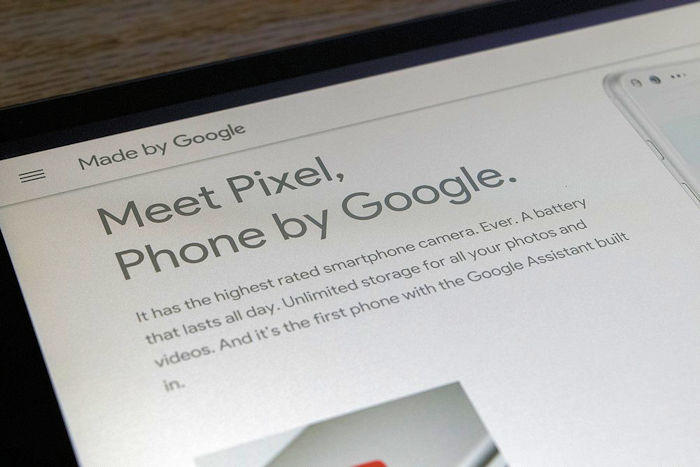
Google has finally rejoined the mobile hardware market with their recently released Pixel phone.
The search giant is touting the Pixel as the first phone “made by Google,” indicating a push to position the phone as Android’s flagship.
Initial reviews are positive, with some journalists comparing the Pixel line to Apple’s ever successful iPhones.
Reviewers are especially praising the phone’s integration with Google assistant.
Assistant is Google’s replacement for their Google Now platform, and looks to lead the way in voice activated technology. Google is calling it the “next evolution” in Google search.
Their plan seems fitting, as the Possum update already has marketing professionals clamouring over location based search.
Voice search on the Pixel seems the next extension to the Possum line of thinking, and marketing professionals should take note.
Google Assistant
Google assistant is shaping up to usher in a new standard of voice search functionality. The platform is poised to make an impact in SEO circles thanks to Google’s unrivaled search database and their aptitude for machine learning.
The Pixel makes its debut as Google’s only assistant enabled device makes the phone vital for marketers eager to learn assistant’s SEO potential.
Let’s break down the Google assistant to better understand how it impacts SEO.
Local Redefined
Google’s Possum update made long-tail keywords with relevant location data the newest way to target mobile consumers.
Before Possum, businesses outside of a city’s limits would lose search rank for including their city’s name in keyword strings. Now, data accounts for locations outside of cities, and actually rewards city names in keyword strings.
Marketing professionals are speculating that this rework was in anticipation for Google assistant.
Voice search is exclusively location based, and Possum would meld well into the assistant platform by varying search results in big cities.
Marketers should pay close attention to Pixel search results to determine if this hypothesis is correct. Location specific keywords could prove crucial to ranking near the top of voice searches.
Voice Search vs. Text Search
Even if location data is city sensitive, marketers still need to contend with creating the proper keyword strings.
Voice search phrasing differs from text search. Put another way, the written word is not the same as the spoken word. Phrases such as “I want to go bowling,” will return positive results in a voice search, but non-specific results in a text search.
The skewed results are in part because of location, but also because of phrasing.
Marketers should start integrating spoken word phrases into their SEO strategies to access the growing voice search market.
Machine Learning
Google assistant differs from other voice search platforms by boasting AI that learns as it converses with you.
This is potentially game changing for SEO professionals.
Traditionally, fixed variables like entered keywords, your location, and sometimes cookies/search history determine search results.
Machine learning means that Google assistant will vary search results based on user interests.
This means that generic short tail keywords may fall by the wayside.
For example, “red shirts” for one user might return Urban Outfitters, but for another it returns Mens Warehouse. Google assistant learning user preferences makes long-tail keywords even more important.

No one knows for certain what effects the Pixel will have on marketing as it introduces Google assistant to a large portion of smartphone users.
What we do know, is that many in the SEO industry share our speculations. Our industry must prepare for the Pixel’s impact to stay current in SEO trends.


Published Date: 6th December 2016
Category: Online Marketing 


